Nevada cannabis tax revenue has become one of the strongest indicators of how the state’s legal cannabis market continues to evolve. Since adult-use cannabis sales launched in 2017, Nevada has generated hundreds of millions of dollars through cannabis excise taxes, retail taxes, and licensing fees. By 2026, the market will have matured into a major part of the state economy, especially in tourism-driven areas like Las Vegas.
Consumers often focus on product pricing, but tax revenue data tells a bigger story. It reveals how cannabis demand changes over time, how tourism affects dispensary sales, and how state policies shape the legal market.
Quick Take: What You Should Know
- Nevada cannabis tax revenue has steadily grown since adult-use legalization, although yearly growth has slowed after early market expansion.
- Las Vegas remains the largest driver of Nevada marijuana tax revenue because of tourism and population density.
- Nevada cannabis market trends show stronger competition, changing consumer habits, and increasing market maturity heading into 2026.
How Has Nevada Cannabis Tax Revenue Changed Since 2018?
Nevada’s legal cannabis market expanded rapidly after recreational sales began. Early years saw sharp increases in cannabis purchases, especially in Clark County and Las Vegas.
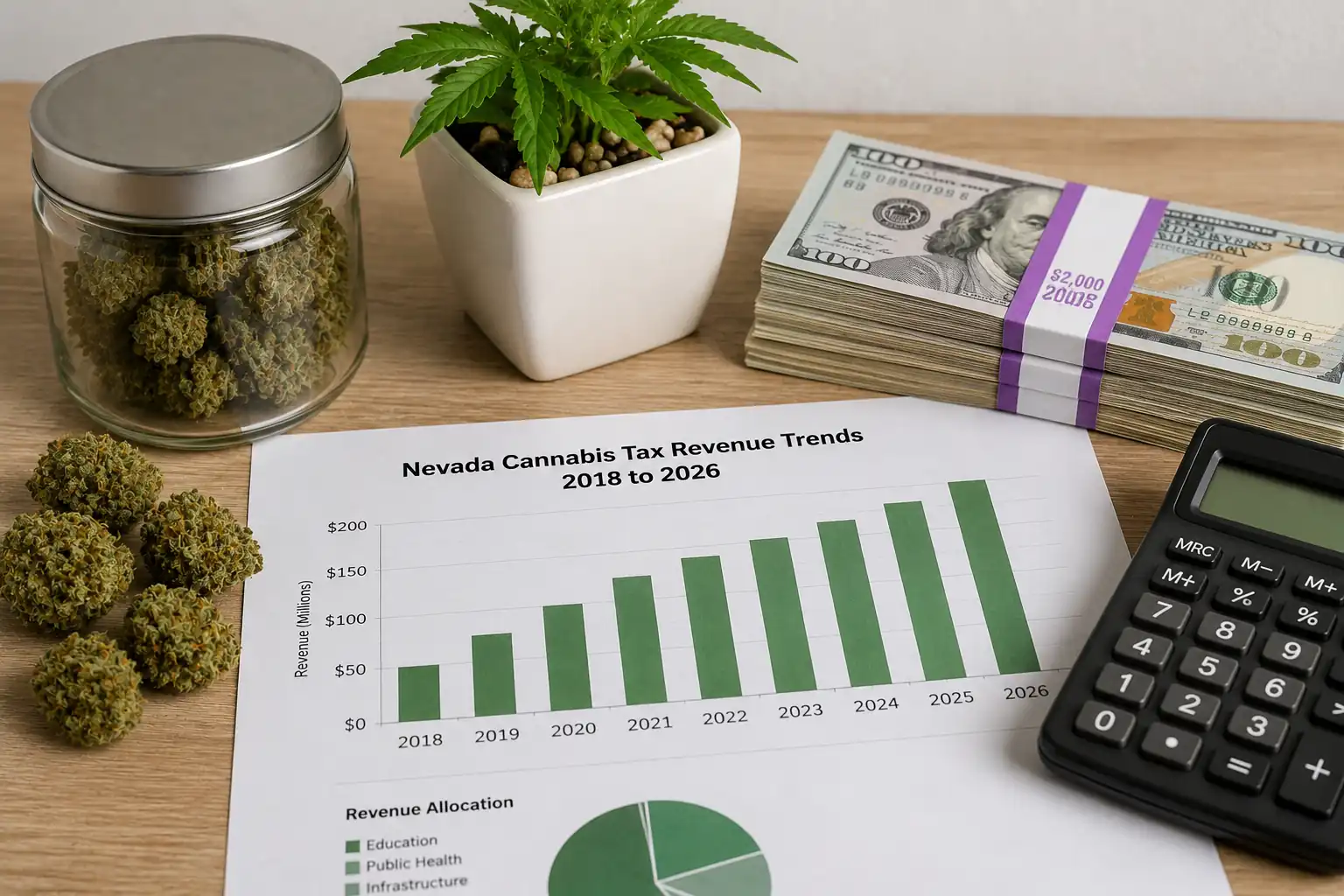
Here is a simplified overview of Nevada cannabis tax revenue trends between 2018 and 2026.
| Year | Estimated Market Trend | Key Market Notes |
| 2018 | Rapid growth | Early recreational market expansion |
| 2019 | Strong growth | Tourism demand increased sales |
| 2020 | Stable but volatile | Pandemic temporarily affected tourism |
| 2021 | Major increase | Consumer demand surged statewide |
| 2022 | Market correction | Competition increased across dispensaries |
| 2023 | Slower growth | Price compression affected revenue |
| 2024 | Stable market | Mature retail market conditions |
| 2025 | Moderate recovery | Tourism and local demand improved |
| 2026 | Projected stabilization | Long-term market normalization |
Nevada marijuana tax revenue increased quickly during the first few years because consumers shifted from illegal markets to licensed dispensaries. More retail locations also improved access across the state.
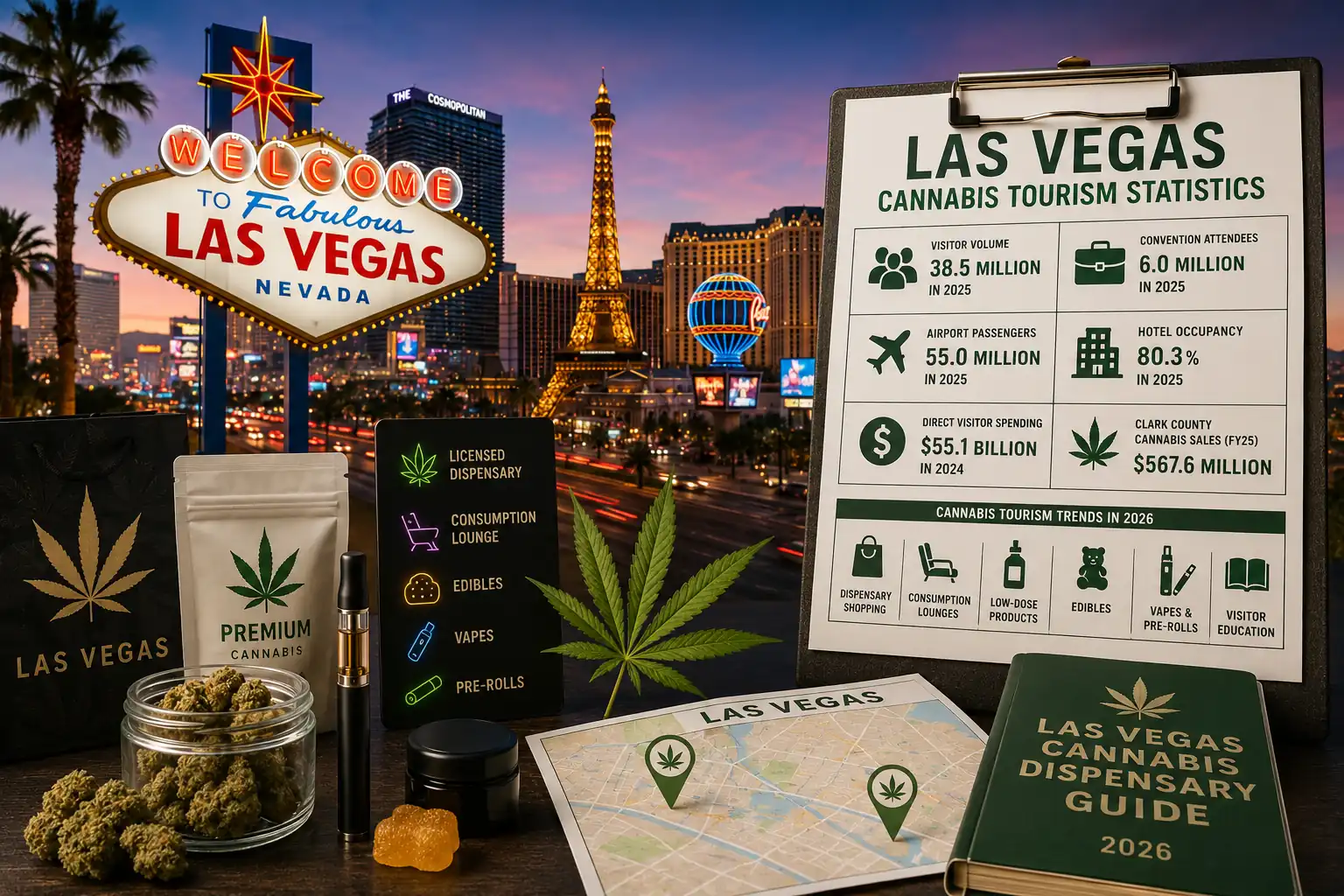
At the same time, Nevada cannabis industry revenue benefited heavily from tourism. Las Vegas visitors remain a major source of cannabis spending throughout Nevada.
Why Does Nevada Collect So Much Cannabis Tax Revenue?
Several factors help Nevada generate high cannabis-related tax collections compared to many other states.
Tourism drives cannabis spending
Las Vegas attracts millions of visitors every year. Many tourists purchase cannabis products during their stay, especially adult-use products like:
- Pre-rolls
- Vape cartridges
- Edibles
- Disposable vapes
- Flower products
Tourism remains one of the largest contributors to Nevada marijuana sales tax collections.
Nevada has a mature legal market
Nevada legalized recreational cannabis early compared to many states. This gave businesses time to build:
- Retail infrastructure
- Brand awareness
- Delivery systems
- Consumer loyalty programs
As the market matured, Nevada cannabis industry revenue continued expanding even during periods of slower economic growth.
Consumers increasingly trust licensed dispensaries
Legal dispensaries provide:
- Tested products
- Regulated labeling
- Safer purchasing environments
- Product consistency
This has helped Nevada cannabis tax revenue remain relatively stable despite increased market competition.
What Taxes Apply to Cannabis Sales in Nevada?
Cannabis products in Nevada are subject to multiple taxes. These taxes directly support Nevada marijuana tax revenue totals reported each year.
The main cannabis-related taxes include:
- State retail excise tax
- Wholesale cannabis excise tax
- Standard sales tax
- Local retail taxes in some jurisdictions
Consumers may notice that final checkout totals are higher than menu prices because several taxes can apply at once.
Nevada marijuana sales tax structures vary slightly depending on product type and local jurisdiction, but taxes remain a major source of public revenue statewide.
How Do Nevada Cannabis Market Trends Affect Consumers?
Nevada cannabis market trends directly shape the shopping experience for everyday consumers.
Over time, several major trends have emerged.
Prices became more competitive
As dispensary numbers increased, businesses competed more aggressively through:
- Promotional discounts
- Loyalty rewards
- Bundle pricing
- Delivery specials
This increased competition helped lower average product prices in many parts of Nevada.
Product variety expanded significantly
Consumers now have access to:
- Solventless concentrates
- High-potency edibles
- Fast-acting gummies
- Premium flower brands
- Microdose products
This product diversification contributed to the Nevada cannabis industry revenue growth across different consumer groups.
Delivery services became more important
Many consumers now prefer online ordering and delivery instead of in-store shopping. Nevada cannabis market trends show that convenience plays a growing role in customer loyalty.
Which Nevada Regions Generate the Most Cannabis Revenue?
Clark County remains the dominant cannabis market in Nevada.
Here is a simplified regional overview.
| Region | Market Influence | Key Driver |
| Las Vegas / Clark County | Very High | Tourism and population |
| Reno / Washoe County | Moderate to High | Local consumer demand |
| Carson City | Moderate | Smaller regional market |
| Rural Nevada | Lower | Smaller population base |
Las Vegas alone contributes a major portion of Nevada’s cannabis tax revenue because visitor spending remains extremely high compared to most U.S. cannabis markets.
Nevada cannabis market trends also show that urban regions consistently outperform rural markets due to higher retail density and tourism activity.
Why Did Revenue Growth Slow After 2021?
Many cannabis states experienced slower growth after pandemic-era sales spikes. Nevada was no exception.
Several factors contributed to slower Nevada marijuana tax revenue growth after 2021.
Market saturation increased
More dispensaries entered the market, increasing competition and reducing average prices.
Consumer demand normalized
During the pandemic, many consumers increased cannabis purchases. Later years saw demand stabilize.
Price compression affected revenue
Wholesale cannabis prices dropped in many states, including Nevada. Lower prices can reduce total tax collections even when sales volume stays high.
Still, Nevada cannabis industry revenue remains strong compared to many newer cannabis markets.
What Do Nevada Cannabis Market Trends Suggest for 2026?
The Nevada cannabis market appears to be entering a more stable phase.
Several trends are likely to continue through 2026.
Consumers will prioritize value
Price-conscious shopping continues growing. Many consumers compare:
- Product potency
- Brand reputation
- Promotions
- Delivery speed
- Retail convenience
Premium products may continue expanding
Despite price competition, many consumers still seek premium products, especially:
- Solventless concentrates
- Live resin vapes
- Craft flower
- High-end edibles
Tourism will remain essential
Las Vegas tourism will likely continue driving Nevada cannabis tax revenue for years ahead.
Delivery and digital ordering will grow
Nevada cannabis market trends suggest online menus and delivery ordering will become even more important as consumers prioritize convenience.
How Is Nevada’s Marijuana Sales Tax Used?
Cannabis tax collections help support several public programs and state functions.
Depending on budget allocations, cannabis taxes may contribute to:
- Education funding
- State services
- Regulatory enforcement
- Public health programs
- Administrative costs
Nevada marijuana sales tax revenue has become an increasingly visible part of broader state budgeting discussions.
Also read: Las Vegas Cannabis Statistics 2026
FAQ About Nevada Cannabis Tax Revenue
What is Nevada cannabis tax revenue?
Nevada cannabis tax revenue refers to the money collected through cannabis excise taxes, retail taxes, licensing fees, and sales taxes from legal cannabis businesses.
Why is Nevada marijuana tax revenue so high?
Tourism, especially in Las Vegas, plays a major role in cannabis spending and tax collection across Nevada.
How does Nevada marijuana sales tax affect consumers?
Consumers pay additional taxes on cannabis purchases, which can increase final checkout prices beyond listed menu prices.
What do Nevada cannabis market trends show in 2026?
The market appears more mature and stable, with stronger competition, slower growth, and increasing focus on convenience and pricing.
Is Nevada cannabis industry revenue still growing?
Yes, although growth has slowed compared to earlier years. Nevada cannabis industry revenue remains one of the strongest regulated cannabis markets in the western United States.
Final Thoughts on Nevada Cannabis Revenue Trends
Nevada cannabis tax revenue tells a larger story than simple sales numbers. It reflects how consumer behavior, tourism, regulation, and market competition continue shaping the legal cannabis industry across the state.
From the rapid expansion years after legalization to the more stable market conditions expected in 2026, Nevada remains one of the most important cannabis economies in the United States. Las Vegas continues driving much of the market, while changing consumer habits influence everything from pricing to delivery services.
For cannabis consumers, understanding Nevada marijuana tax revenue and broader Nevada cannabis market trends can help explain why prices fluctuate, why some regions have more dispensaries, and how the industry may evolve in the years ahead.
As Nevada’s cannabis industry continues maturing, businesses like The Cannabis Co. remain part of the broader regulated market serving consumers across the state.